In the commercial security sector, there is a common operational mindset: If it isn’t broken, don’t fix it.
For years, many enterprise facilities and security integrators have relied on legacy hardware and legacy infrastructure that continue to function adequately on a day-to-day basis. The doors still lock, the sensors still trigger, and the core software still boots up.
However, in today’s rapidly changing threat landscape, a system that is simply "functioning" is often operating at a significant disadvantage.
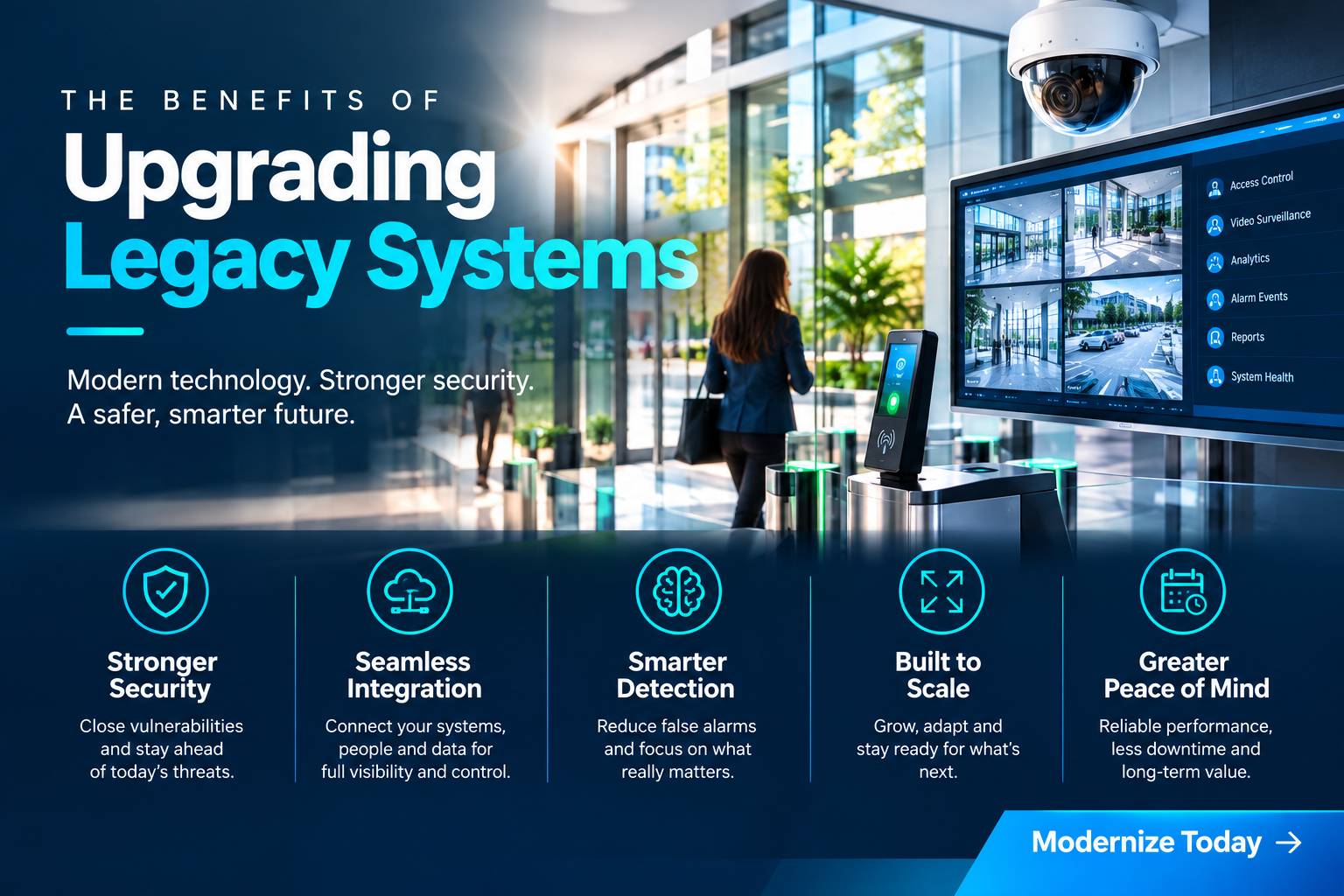
What many organizations view as a stable, legacy setup is frequently a growing operational bottleneck. Upgrading legacy systems is no longer just a technical refresh—it is a critical step in protecting physical assets, mitigating liability, and maintaining seamless operational continuity.
Here is why modernizing legacy security infrastructure has become a top priority for forward-thinking security leaders.
Eliminating Vulnerabilities in Aging Hardware
Legacy security systems were engineered for a different era of technology. Over time, physical components degrade, replacement parts become scarce, and hardware manufacturers eventually end support for older product lines.
Relying on end-of-life (EOL) hardware creates two major risks:
- Extended Downtime: When a legacy component fails, sourcing a replacement can take days or weeks, leaving critical access points or monitoring zones unmonitored.
- Maintenance Drain: Technicians spend valuable time applying short-term patches to aging equipment rather than optimizing system performance.
Modern security hardware offers higher reliability, better power efficiency, and long-term manufacturer support, ensuring your coverage remains uninterrupted.
Bridging the Gap Between Legacy Infrastructure and Modern Software
One of the largest hurdles security managers face is software incompatibility. Modern security environments increasingly rely on real-time data, cloud integration, automated notifications, and advanced analytics.
Legacy field panels and controllers were never designed to handle the bandwidth or data structures required by modern security management platforms. As a result, organizations attempting to run modern software on legacy hardware often encounter:
- Slow response and communication times between field devices and central management.
- Limited visibility and incomplete reporting across facility access points.
- Inability to integrate with third-party platforms like video surveillance, visitor management, or building automation.
Upgrading your core hardware bridges this gap, allowing advanced software tools to perform at full capacity.
Smarter Threat Detection and False Alarm Reduction
Older detection systems rely on basic binary triggers—either a sensor is tripped or it isn't. This lack of nuance leads to high rates of false alarms, which drain operational resources, create unnecessary disruptions, and cause operator fatigue.
Modern screening and detection technologies leverage advanced sensor arrays, environmental filtering, and intelligent signal processing to differentiate between benign everyday objects and actual threats. By upgrading to intelligent detection platforms, facilities can:
- Maintain high-throughput access without slowing down foot traffic.
- Drastically reduce false positives that distract security personnel.
- Ensure immediate, actionable data is delivered directly to on-site guards when a legitimate threat is identified.
Scalability and Future-Proofing
As a business grows, its security requirements evolve. Adding new facilities, increasing employee headcount, or updating operational protocols requires a security infrastructure that can scale effortlessly.
Legacy platforms are notoriously rigid. Expanding a legacy system often requires complex custom wiring, expensive proprietary add-ons, or complete workarounds.
Upgrading to an open, modular architecture gives your organization the flexibility to:
- Expand coverage incrementally without overhaul.
- Seamlessly integrate new technologies as they emerge.
- Adapt quickly to changing industry compliance standards and facility guidelines.
Modernize Your Infrastructure with VISS Technologies
Upgrading a legacy security platform does not have to mean a disruptive, rip-and-replace operation. With the right strategic partner and modular technology stack, organizations can transition smoothly from aging infrastructure to a modern, high-performance security environment.
At VISS Technologies, we specialize in delivering robust, scalable security solutions designed for modern enterprise demands. Whether you need to resolve hardware limitations, improve threat detection accuracy, or streamline multi-site operations, our team is here to help you navigate the upgrade process.
Ready to evaluate your current security infrastructure?
Explore our full suite of solutions at www.visstechnologies.com or reach out to our team today to discuss your modernization strategy.