
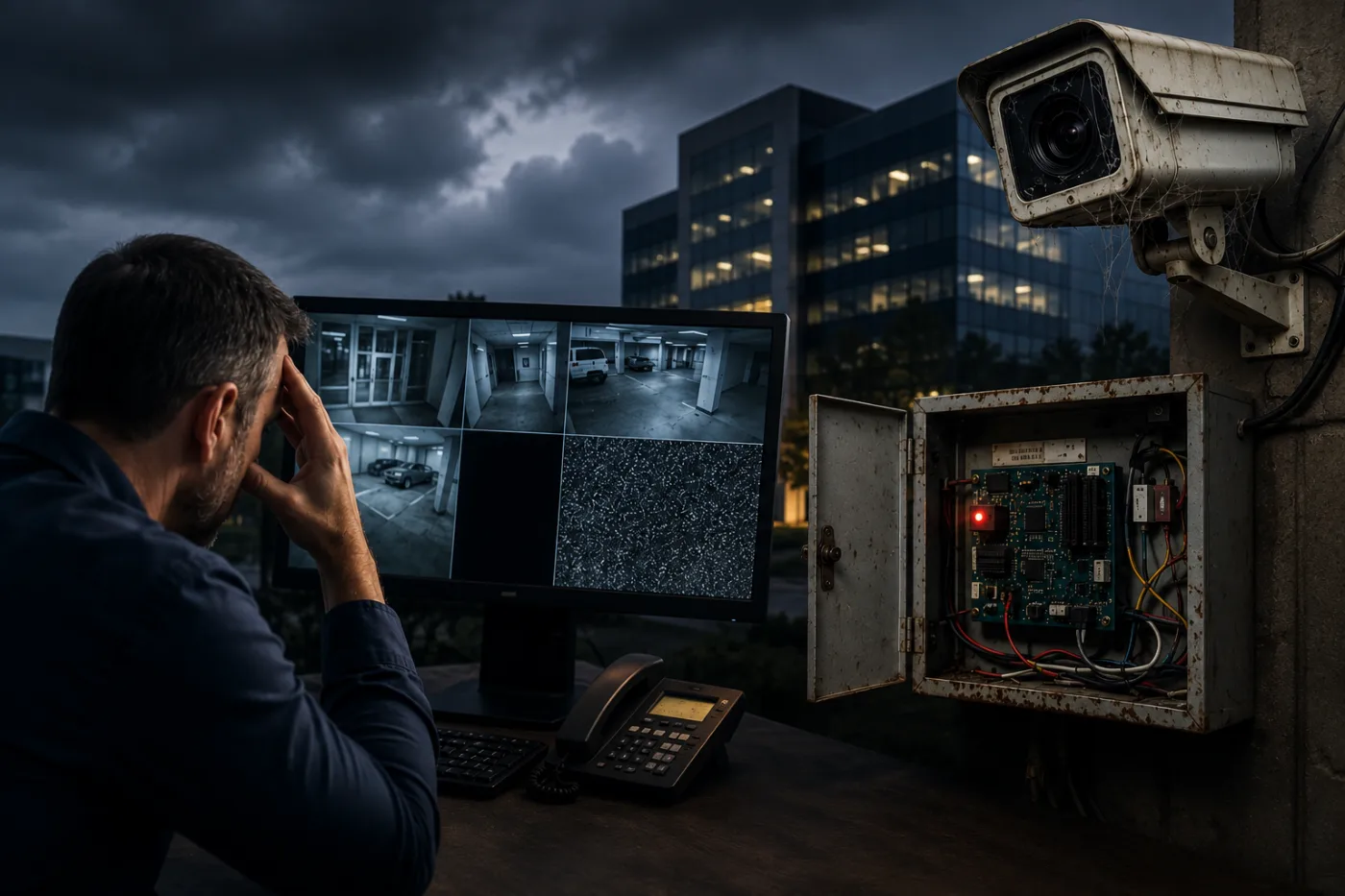
The Hidden Hazards of Legacy Security
When managing a commercial facility or residential property, "if it isn’t broken, don’t fix it" can be a tempting philosophy—especially when it comes to electronic security infrastructure. If the cameras show an image and the access readers beep when a card is swiped, it’s easy to assume your site is protected.
However, in the world of security integration, an old system that is "working fine" often creates a dangerous false sense of security.
As threats evolve, relying on legacy hardware and outdated monitoring infrastructure introduces critical vulnerabilities that impact your bottom line, tenant safety, and operational efficiency. Here are the primary hazards of running outdated security systems in modern facilities.
End-of-Life Equipment & Unpredictable Failure
Security hardware doesn’t last forever. As components age, their reliability drops precipitously. The most significant hazard with end-of-life equipment isn't just that it breaks—it's when it breaks. Systems rarely fail during routine business hours; they fail during power surges, severe weather, or in the middle of a critical security incident, leaving your property completely exposed when you need protection most.
Unavailable Parts and Extended Downtime
When a legacy camera, control board, or power supply goes down, finding a direct replacement can quickly become a logistics nightmare. Manufacturers regularly discontinue support and spare parts for older lines.
Search efforts often lead to:
- Long lead times while hunting for refurbished or second-hand components.
- Steep charges and prohibitive costs for obsolete parts sold.
- Extended system downtime, forcing you to deploy expensive physical security guards to cover blind spots while waiting for repairs.
High Maintenance Costs
Outdated systems are highly inefficient to maintain. What may start as a minor service call often turns into recurring truck rolls, constant troubleshooting, and endless patching. Over time, the reactive money spent keeping an obsolete system on life support far exceeds the cost of a planned, strategic upgrade.
Blind Spots and Reactive Surveillance
Legacy CCTV and basic alarm monitoring are by nature reactive. Traditional cameras record events for forensic review after a break-in, theft, or liability incident has already occurred. Older systems lack the processing power for real-time video analytics, automated threat detection, or instant verified alerts. In modern facility management, waiting to review footage after an incident is no longer enough to mitigate risk.
Is Your Facility at Risk?
Relying on outdated security infrastructure exposes your property, tenants, and budget to unnecessary vulnerabilities.
The good news? Upgrading doesn't always mean ripping and replacing your entire infrastructure. Modern integration techniques often allow security leaders to leverage existing cabling and camera infrastructure while adding advanced analytics and unified management.
In our next article, we will break down the tangible benefits of modernizing your security, including how AI-powered analytics and unified platforms lower maintenance costs and transform your cameras into proactive security.
Evaluate Your Current Security Posture
Don't wait for a system failure or security breach to find out where your vulnerabilities lie.
Contact VISS Technologies today to schedule a complimentary no obligation security survey. Our team of experts will assess your current setup, identify critical risk factors, and help you build a practical security strategy for the future.